
A Rhythm of His Own: Kelvin Harrison Jr
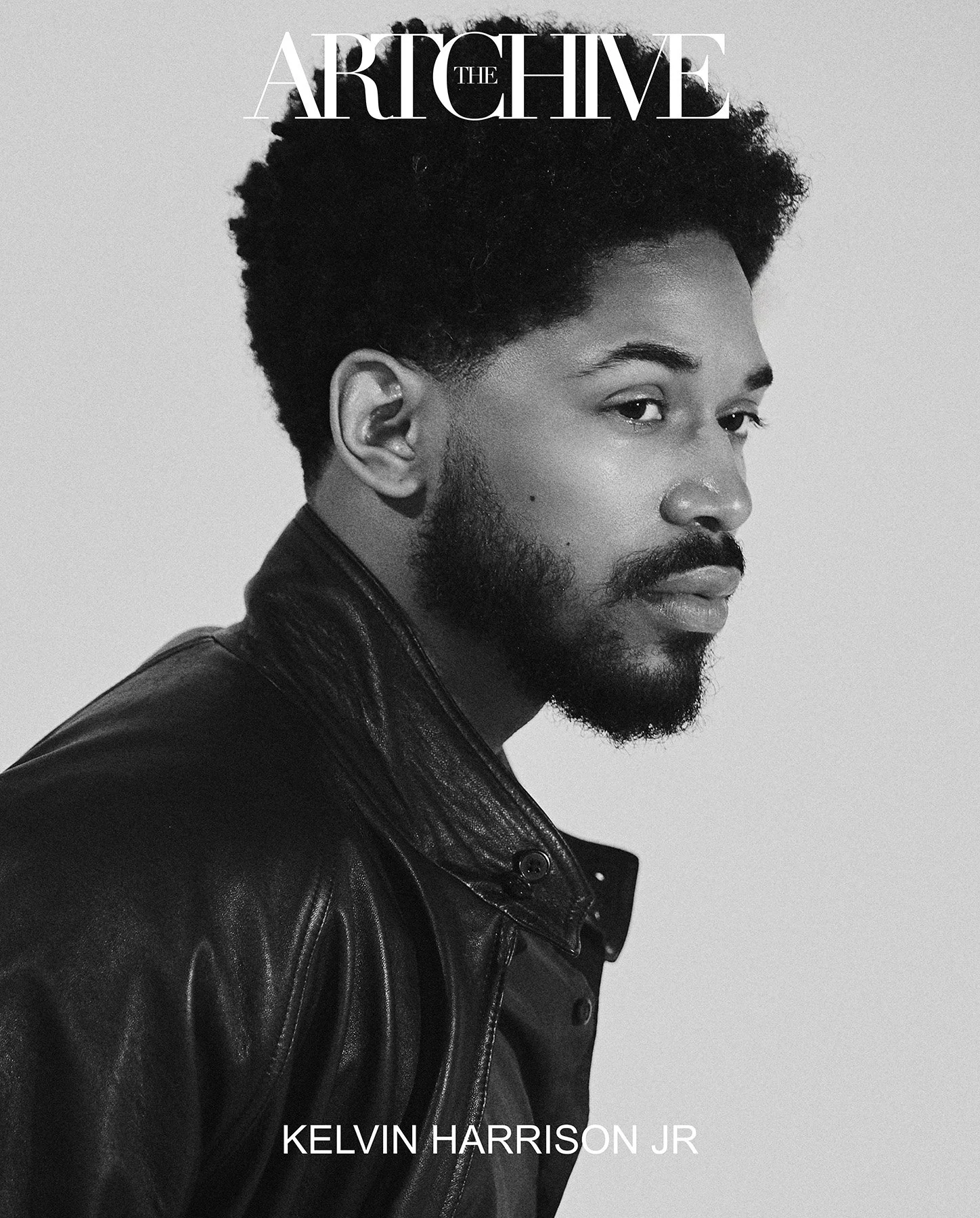
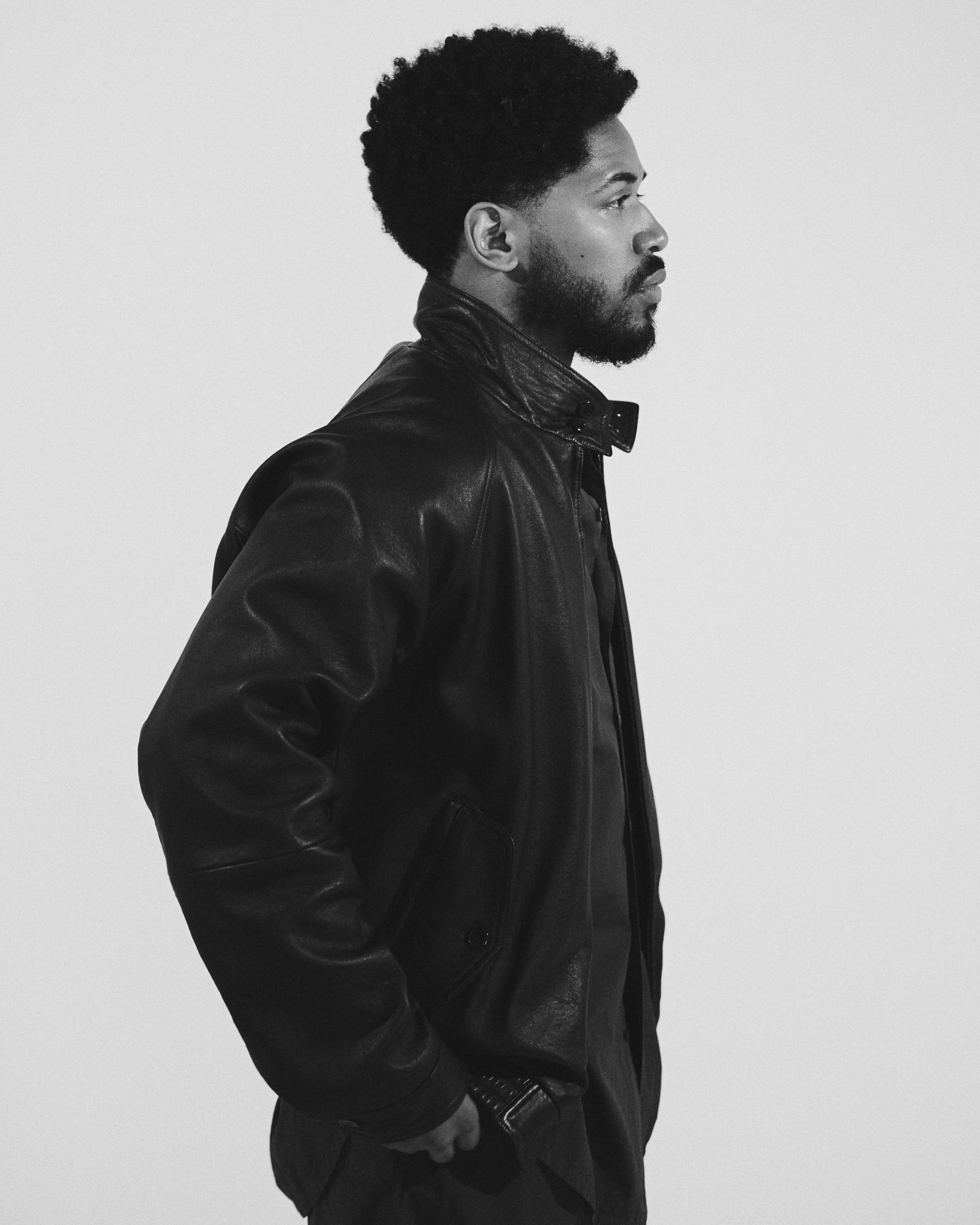
Photography by Mekhi Turner, Styling by Luca Kingston
This article is taken from the July 2026 issue of The Artchive Magazine:
Kelvin Harrison Jr. grew up in New Orleans, surrounded by the sounds of brass and crushed aluminum under tapping feet, the smell of crawfish, the feel of a crisp suit, and the pressure and privilege of a jazz family legacy already in full swing. Maybe he once thought the beats of his life were already written on sheet music, but it wouldn’t be jazz without syncopation, improvisation, and trust in where the spirit sings. In conversation with industry peer and friend, Da’Vine Joy Randolph, he tells her about moments of intense doubt, swiftly countered by the kind of immense courage that only comes from a source far greater than yourself. Harrison describes a “triumph” as all the times purpose goes toe-to-toe with fear, and wins. With Randolph, Harrison explores obstacles throughout his life: attending a majority-white high school, “filling” Jeffrey Wright’s former shoes as Jean-Michel Basquiat in Samo Lives and Beetee Latier in The Hunger Games: Sunrise on the Reaping, and sitting with uncertainty after their shared project was scrapped. Harrison’s sense of purpose puts fear to shame nearly every time, even when the fear seems insurmountable.
It’s a privilege to witness a conversation between storytellers, who not only tell the story, but then translate it to what it really means, what it feels like. In discussing the role of audience reaction, Randolph poignantly references, “If a tree falls in the forest and no one is around to hear it, does it make a sound?” Some questions don’t have answers, nor do they have to. But if the sound exists only in spirit, maybe it still makes a sound. At least it does here.
Da’Vine Joy Randolph: Hello, Kelvin, how are you?
Kelvin Harrison Jr.: I’m good. I was in Germany. I thought I was going to Berlin because we shot The Hunger Games: Sunrise on the Reaping there, and we were doing pickups. I landed, looked up, and I said, “Where am I?!” I was in Düsseldorf. How far is Düsseldorf from Berlin? Six and a half hours. [laughs]
D: Dang! Is Germany that big?! Wow, okay, we need to talk about that later. Let’s get into it! We have this in common: when you first embarked on your artistic voyage, it was through music, right?
K: Yeah. You met my mom and dad, but you haven’t met my cousins. My grandfather’s brother was the “Big Chief” of New Orleans. The “Big Chief” is the commander in charge of the Mardi Gras Indians. Traditionally, the chief leads a parade, but is also someone we look to protect certain communities in New Orleans. There’s a celebratory aspect, too. So, we get into the music—the brass bands, second lining, and tribal bongos. My dad and my uncle’s son went to school with the Marsalis family, [New Orleans’ most prominent Jazz dynasty]. Ellis Marsalis Jr. was their teacher. There were jazz families in New Orleans. When I came into it, I was already a child of this legacy. My dad was like, “What do you want to play?” I chose the violin.
D: Interesting. The violin isn’t traditional. So you were rebelling then. Okay, cool, copy.
K: When I was five or six, I was part of the Suzuki program, and from there, I graduated and joined a proper orchestra. Then Hurricane Katrina happened, and the program went away. My parents used to be a part of a music ministry in churches, and they were having trouble with their keyboardist. They were like, “Well, I bet Kelvin could do it.” [laughs]
D: Had you ever touched a piano before like that? Your parents were just like, “Yep.”
K: “Get him to do it.” So, they got me a piano teacher. I learned two songs, did an A and B selection, and we milked those songs for a couple of services. Every week, my mom gave me a new song to learn. I started doing some ear training and learning techniques. That was my job on Thursdays.
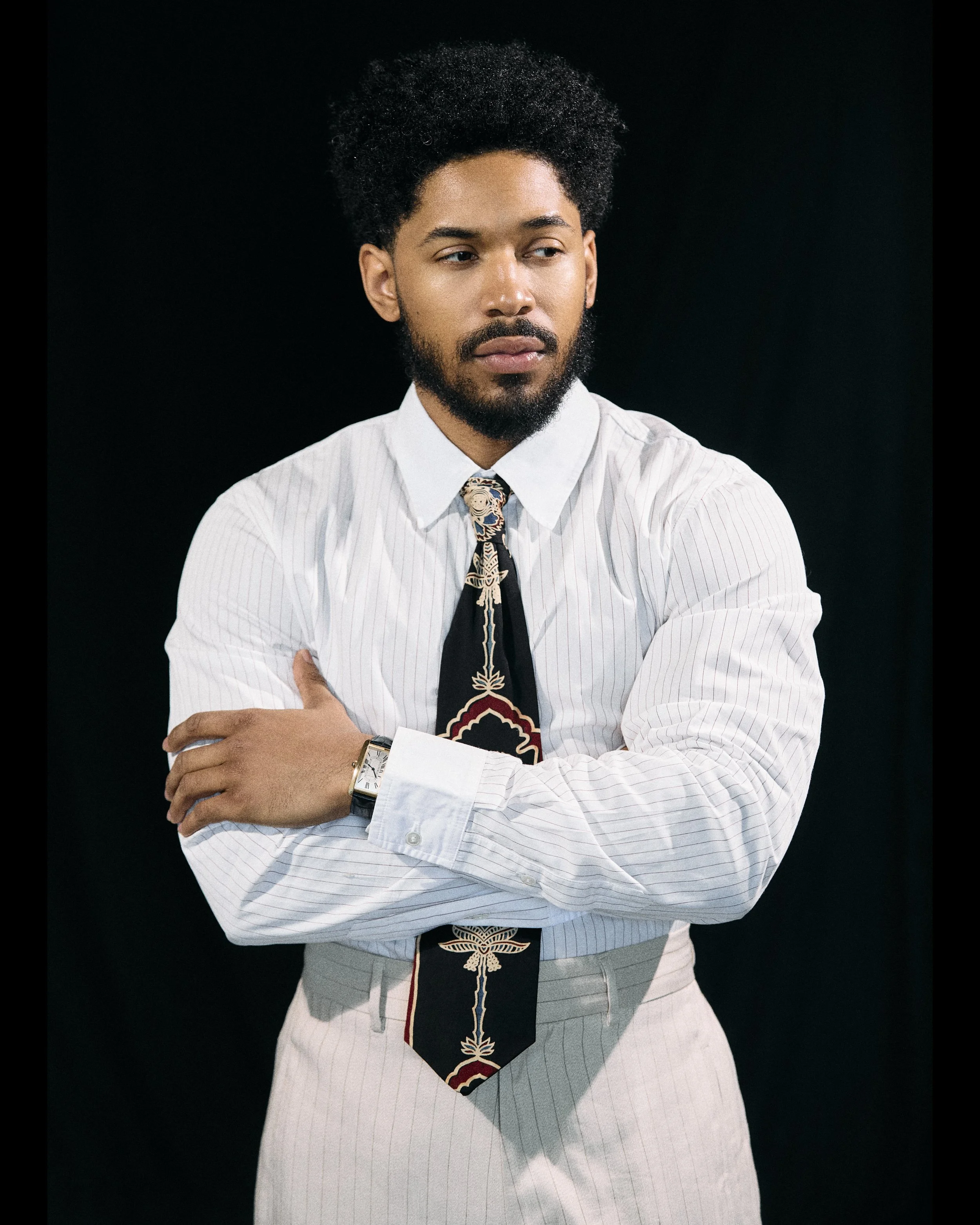
full look AMIRI; custom tie; watch CARTIER; shoes GRENSON
D: Did it feel like a business at such an early age? How were you processing it?
K: I knew I made money. The first time I did it, they were like, “We'll give him a $100 check per month.” I was like, “Are you kidding me? I'm eleven. I’m rich.” [laughs] I didn’t know any other eleven-year-olds who got $100 in their bank account every month. We did that for a few years and went to another church. That left room for negotiation. [laughs]
D: Wait a minute! So your brain is going, “It’s time to negotiate”?
K: My dad would always say, “I don’t get out of my bed for less than X amount of money.”
D: So, dad is starting to train your brain to think about your worth as an artist and that monetary value at eleven. Fascinating, please keep going.
K: My mom and dad always taught me to be on time and know the material. I had to take the music ministry very seriously. In addition to being in a jazz band, we were now doing second lines, playing in concerts, and competing in district festivals. We didn't really belong to the church we were part of, so it was strictly a deal. I was getting paid $400 a Sunday at that point. I finessed! I was part of Konica Minolta, which had a scholarship program that required you to perform at different galas. So I would travel and play piano from eleven to thirteen.
I was in Forbes. [laughs] They wanted to do a special on my dad and me. They give an award every four years to the best music teacher in the country, and he won the award. It was a post-Katrina story, about playing at French Quarter festivals and winning the competitions.
D: That’s baller. So, middle school was a good time.
K: Middle school was lit.
D: How did it compare to high school?
K: It was a completely different world. Middle school was smack in the middle of the French Quarter. I'm talking about Saint Philip Street. We're passing Cafe Du Monde, the horse carriages, Jackson Square, and the “Blue Dog.” You’re smelling the crawfish, the po’boy, the horse manure. You’re seeing the kids with Coke cans on their shoes, tap dancing outside.
D: Can I ask you a quick question about [the tap dancing outside]? At that point, you were super trained. Were you ever like, “Dad, I want to do that for a little bit?” Or was it like, “I ain’t gonna go out there.” I wonder if kids in New Orleans with a musical gift think that’s cool, or if you felt like you were on to different things?
K: All my dad’s friends were doing it, and they were cool. It was more about their demeanor, and seeing them with the horn and the case. They had the nice shirt and the tie, looking fresh. They had newsboy hats on. They were like, “We were out last night until 2 am, man.” It was the culture. That was dope until I got to high school. I was one of five or six Black kids in the school. It was the top-ranking school in New Orleans with all these rich kids.
I wanted to go to this school so badly because I wanted to be in the best school. But I was scared. I thought, “I don’t speak like them.” I was like, “We package our food in leftover containers.” I was bringing Gumbo to lunch, and they were going, “What’s that?” Then I became the “performing arts, tap dancing kid.” When I was struggling academically at first, the principal said to my mom, “Well, Cs are good for Kelvin. We don’t expect much.” I remember being embarrassed, angry, and scared. I thought, “What if she’s right?”
D: Up until this point, I’m imagining that you’re getting an overflow of glorification and awards. Now, there’s this shift. You’re hearing something you never heard because you’re always performing above and beyond.
K: I didn't understand class differences. I thought everything was built on merit. But then I realised it was about money, status, and connections. The game completely changed. I had no tools and had to start from scratch. So, I created a network in the school system.It was called “The G Network.” It had animations, and everything was called “Harrison Productions.” I had a reality show, a scripted show, and a competition show.
D: Wow! So much is making sense. I’m fascinated by you. Your brain was like, “Okay, there’s a new currency here that I don’t have, so I’m going to pivot and create an even newer currency that they’ll enjoy.” Then you went outside of what you knew, which is music. Was that the switch into acting?
K: Pretty much. I knew I was there for entertainment, and that is how people donate money. I was really into Disney Channel and MTV, so I wanted to create a space that allowed them to want to be around me and be my friend. picked the six most popular kids from my school and created a show like 90210. I was like, “I know ya’ll wanna be Lauren Conrad, and you think you’re them.” I made a reality show, edited it, then dropped episodes on Facebook. [Those students] were so popular after that. All the little private schools were eating it up! I was like, “Bet.” So I made another show about following this girl everyone thought was interesting, kind of like Daria.
Then I did a Top Model-type show. In school, we had Arts Week, which was when students got to teach classes. I taught a modelling class and filmed it like a show. I asked kids who wanted to be aspiring designers and photographers to make clothes and shoot the photoshoots. I asked for a $1000 budget prize, then I found a local shop willing to let whoever won be the face of their clothing store.
D: Were you just sitting in your room thinking all of this up?
K: I thought of all of this in class when I wasn’t paying attention because it got boring. I also did it in church, when the sermon wasn’t hitting. [laughs] I’d be on them keys just thinking about all kinds of things!
D: Whoa! So this is a big pattern in your life! Your origin story is so impactful. It created the infrastructure for who you are as an artist and businessman. So, how did you actually get into acting?
K: I Googled, “How to be on Disney Channel?” In middle school, I did an acting class, and we had to do monologues. I performed a comedic monologue about my fly being down in front of the class. The audience roared with laughter. I remember being like, “I’m addicted to whatever that is!”
D: When you’re doing galas, and you’re classically trained, it’s all polite clapping. No one is cheering. But then there is this paramount moment when you’re doing this monologue.
What was the journey to getting more of whatever that was?
K: My only reference was Disney Channel. I asked my mom to quit her job and move to LA. She said, “You’re crazy. Get outta my face.” My buddy ended up getting into acting, and he got an audition for Ender's Game. He invited me to come and audition. I got a callback. I did the scene, and they gave me a part. I was on set for five months. It was my senior year of high school, so I did a half day of school and then went to set.
Viola Davis, Harrison Ford, and Sir Ben Kingsley were in the movie. I got close to Viola Davis’ stand-in, and she eventually let me speak to Viola Davis. Her advice was to get into a class. From there, I met another kid who had a bigger role. I asked what class he goes to and asked for his agents. I contacted his agents and told them we were friends. We weren’t. [laughs] But the agents asked for a tape. My sister took a headshot of me with a digital camera in the backyard. Then I went to the class, and that was that. The next audition was 12 Years A Slave.
D: Absolutely, New Orleans. And then it just took off from there?
K: Yeah. I did TheBirth Of A Nation, which popped at Sundance. My current management wanted to find young Black talent. He hit me up, and I was like, “Oh, my God, you’re not the only one hitting me up; there are tons of people hitting my phone right now, but I’m really grateful we could talk because I feel we are aligned.” [laughs]
D: You’re eighteen, talking about “alignment”?!
K: The Hollywood Reporter roundtables were everything! They were teaching me how to speak!
D: At a very young age, you gave yourself agency. When there was an obstacle, you dug in and figured it out! What about the business of being a musician helped you in acting?
K: The discipline. There was not a lot of positive reinforcement, but respect if you did something good.
D: I think you get more verbal praise in acting. In music, especially classical, you are meant to keep your head down, be part of the whole, and you’re not special. If you are special, it’s because someone taught you that. You are always a student.
K: From the church music, I realized that it’s not about how well you play the music, but whether the spirit is leading you. The question was, “Are you moved as you play this?” That’s the part of storytelling that is compelling. “How are my trials and tribulations working to touch people?” It’s about being of service.
D: Does the music and acting side of your brain ever merge? It is so separate for me. Are you kinder to one side of yourself? I am brutal to myself in the music realm. Similar to you, I started with the church. There was a song every Saturday. I woke up, Anita Baker was on, we’d clean the house for two hours, and as soon as that was done, my mom had the new song for next weekend. That required a lot of ear training while still getting classical training. I went to Interlochen. I was there with a majority Asian population, and they do not play! I’m always paranoid that I’m tone-deaf.
K: Is it because you know so much? You know too much about what needs to be happening to allow yourself to even get a little bit off the rails.
D: I don’t like loosey-goosey situations outside of the infrastructure of having teachers! I’m like, “Dang, I’m all I have!” I’m really like, “You’re gonna need to hold on for a second because this ain’t right and stop telling me that it is because you’re actually pissing me off!”
K: I feel you! It’s anxiety because you’re not protected in it. Unless you’re around the people who get it, which isn’t often, you’re constantly being misguided. Then you are in the position of getting everyone back on track, and that’s too much! Ain’t nobody paying enough for that!
I can’t wait for the opportunity to be in a musical. The vibrations in your body are so different. It’s like your whole biology is working. I’m hard on myself in music and acting, but I give myself more room in music. I’m not known as a musician. I made that very clear to my family, who were disappointed when I decided to become an actor. They thought, “If white kids are taking on the family business, why can’t you take your opportunity on the family business?” But I didn’t think that was where my gift sang the most. I was also processing it through the lens of, “Did ya’ll hear those people laugh when I did that thing?!” I was like, “Ya’ll ain’t moved enough!”
D: Real talk, do you partially do musicals for them?
K: I did Chevalier partially for my dad. I wanted him to be proud. I wanted him to know that I learned from him and saw his journey as one of the first Black men in the Philharmonic symphony in the South. But my family is the same with acting as they are with music. They’ll be like, “You’re not taking enough space. You’re constantly surveilling yourself in a scene, and it made it hard to watch.” I think they understand the block between the artist and their work to reach the audience.
D: Wow! This industry is so full of rejection, uncertainty, and sacrifice. In many ways, what the industry is looking for is ever-changing. The greatest “success” is mastering the test of resilience. What is the thing that keeps you coming back to this?
K: It truly is being inspired by other artists. I think, “It felt so good to be touched in this way. I’m so glad that person is using their gift. Why would I have a gift and not use it?” I find it disgusting and selfish not to use it. Even if I don’t think so highly of my gift, or I’m fed up, that doesn’t mean that it’s not valuable and powerful. I find spaces where it matters and lands. Last year was so interesting. We had our movie. Then we didn’t have our movie. [laughs] I sat around and thought, “What does that even mean?”
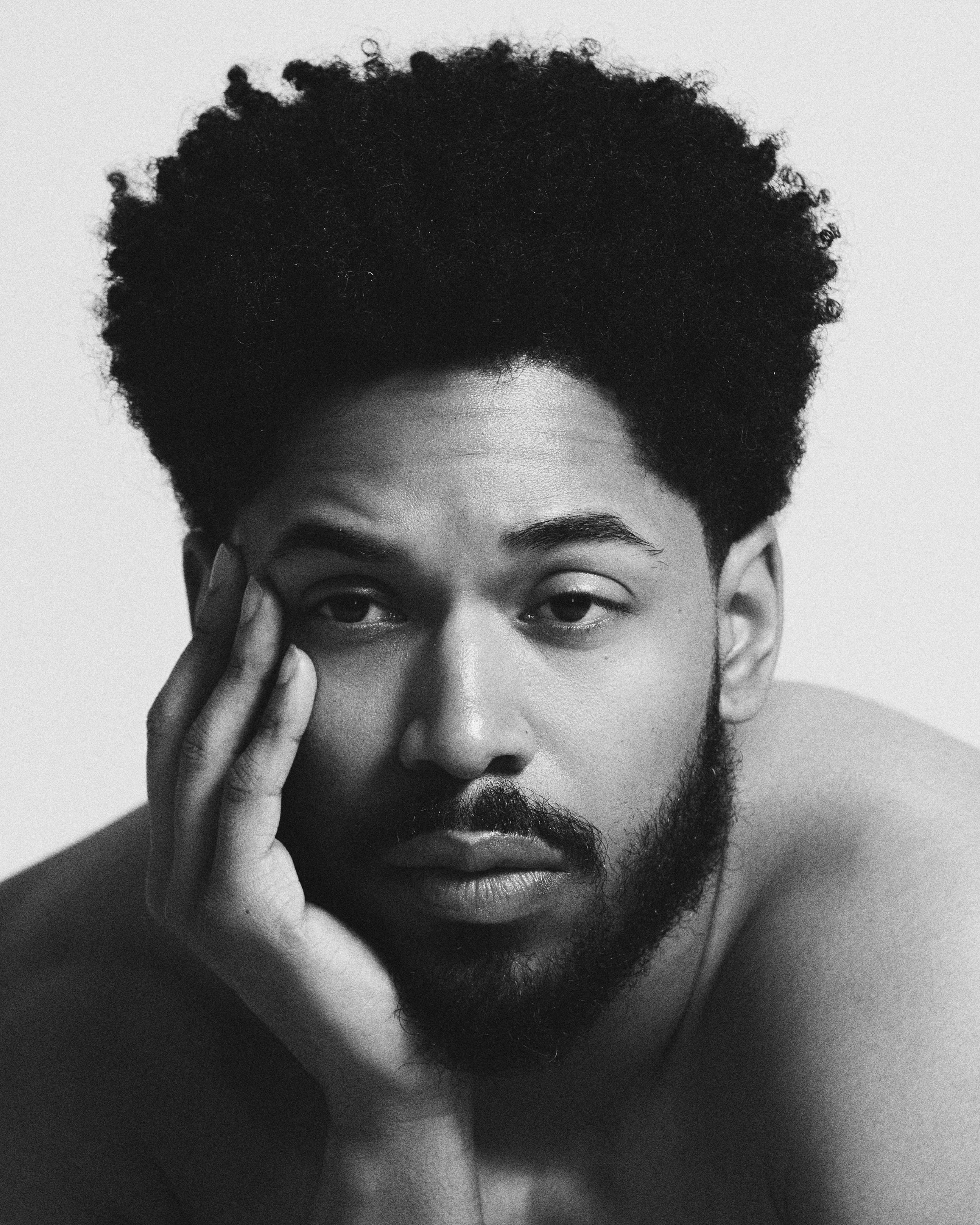
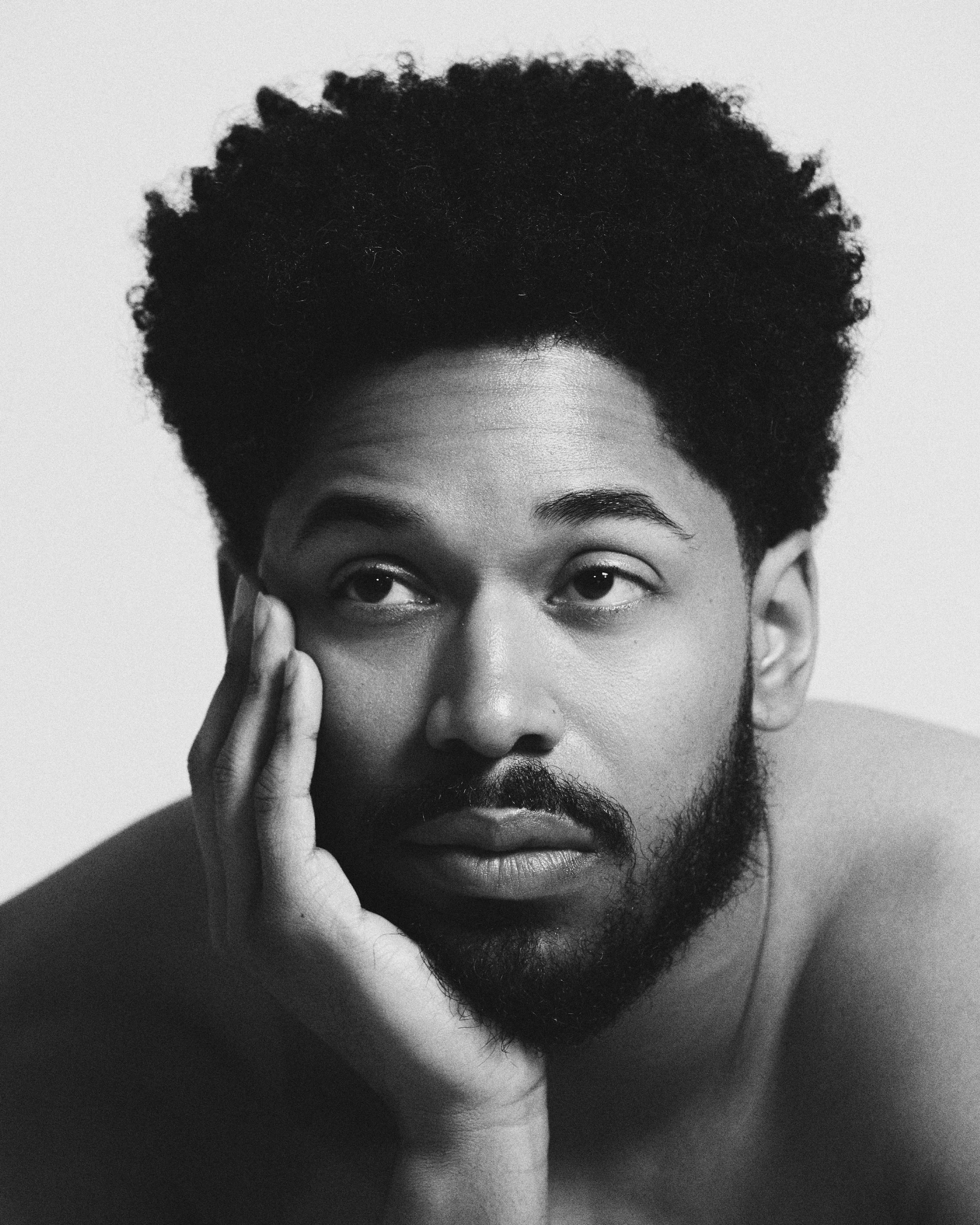
D: You know the saying, “If a tree falls in the forest and no one is around to hear it, did it make a sound?” It was like that. You poured yourself into that project, and no one will know about it! When our project was cancelled, I thought, “Da’Vine, now you really have to give yourself and be of service, even if no one sees it.” And let’s be real, a lot of what makes us come back is knowing that the performance hit something, even if it’s just one person.
K: Yes! It’s the completion of the process. It’s almost like dying and not moving on. When we were filming the movie, I watched a film called Sasquatch Sunset, and I was obsessed. I went back to my manager and said, “This makes me feel good.” I knew it wasn’t the “leading man” role, but my weird self wanted to be a part of something like that. The first movie I got after that lull was a movie with those directors and one of my favorites, Cate Blanchett!
D: Do you think you manifested that? If nothing else, you are extremely intentional.
K: That movie was fully cast, but then three actors dropped out. My agent represented one of the actors. So I met with them and told them how much the movie meant to me.
D: Passion is hard to say no to, and of course, your talent. Has there ever been a role where you were like, “Yeah, man, I’m in pocket”?
K: It’s rare. My version of being “in pocket” is when I’m not second-guessing. That happened on Waves. I would move on with my day, have food, come back, and keep it pushing.
D: To be on the set of Waves, wow! I get to experience the fullness of you on a personal level, and I saw all of those colors show up in your work on Waves. It blew me away. The question for every actor is, “How do we recreate that emotion so it comes up more in future projects?”
K: I think about that, but I always feel guilty trying to chase it.
D: I always say, “How can I work from a place of ease?” When they say “cut,” I look around, and the reactions tell me whether it went well, but I don’t remember. In scene study classes, when I was “in pocket,” I could not remember anything. My teacher said, “The only way you can gauge your performance then is that if you black out, you did what you needed to do.” In my experience, it seems like the more you let go and are selfless, the better it is, but it’s not for you.
K: I feel that, too. My acting coach used to say, “You can’t be in the scene and in the audience at the same time.” He would ask me, “How did that feel?” I would say, “I don’t know,” because I also don’t remember. I was there, and that was that!
D: I rarely watch my own work. I want to work from a place of freedom. I don’t care about what Da’Vine looks like when working. I can’t watch between takes. Do you ever watch yourself back and don’t even remember where it came from?
K: You know what’s funny? It’s usually the best stuff. It irritates me because then it’s out of my control. Then my mindset is like, “Well, you are not in control of the gift at all, actually.” It’s scary when I walk on set, and they’re expecting me to deliver what they want me to deliver. I feel like I have no idea what I’ll deliver; it is beyond me. All we can hope for is that the environment is safe enough for inspiration to flow.
D: I hope you continue to carry what you just said and know that it’s more than enough. Let’s get into The Hunger Games. What was it like stepping into an already established franchise and playing a young version of an already established role [as Beetee Latier]?
K: It was different, but I wasn’t afraid because it was Jeffrey [Wright] who played the original role. Jeffrey originated theJean-MichelBasquiat role, too. So I already went through the emotional work of asking, “Will I live up to the incredible, brilliant work that Jeffrey laid down?” I allowed myself to shed that responsibility. So when I got to Sunrise on the Reaping, I was like, “I am not concerned that ya’ll love Jeffrey Wright.” I have been around Jeffrey enough to give a little taste of that anyway.
D: Right. I was wondering if there are any “—isms” you took from him?
K: I definitely wanted to have his voice. But I literally left Jeffrey on the set of Samo Lives, and went straight to Sunrise on the Reaping. And he just delivered a performance in my face that I ain’t ever seen before! I couldn’t believe what he was doing! In the middle of the take, I went, “How are you doing this?!” He just smirked.
D: He said, “That’s for you to find out, my guy.” You also played his son in Monster, and now you will have shared two roles with him, with Beetee [Latier] and Jean-Michel Basquiat. You two seem to circle back into each other's careers, which I think is no coincidence.
K: When I first met him, I was terrified of him. I was playing his son, and it immediately felt like a father-son dynamic. I remember thinking, “What if he doesn’t think I’m good enough?” I really appreciated that he never treated me like I was his kid. He treated me like a young man with a great opportunity and responsibility. That was the beginning of me not bowing my head and saying, “Oh, my gosh, thank you so much,” when I walk into the room.
D: When I worked with Meryl Streep [on Only Murders in the Building], she said that there is a very real thing in that the projection and persona of [industry icons] come into the room before they’re even there. That’s a lot of weight. Those titans are more attracted to people who just treat them normally and come to work. I’ve seen people shaking in their boots around them, and that’s the most disappointing thing for them.
K: I think it’s about “Who wants to overcome the fear?” The fear is there. We’re all scared. They’re scared, too. A person who is triumphant and goes there is the winner of the day. I don’t always pass that assignment. I do cower. I was like that on our movie set. You got me together QUICK! [laughs]
D: I didn’t want you to miss the moment for yourself. The reality is that we all feel that. I’m sure some people coach themselves differently and posture, but it’s still there. If people say they don’t feel that fear, they’re lying. I have never even played a lead before, but I do feel a responsibility when I see someone going through something. I’ll absolutely come to the call of duty. And I would hope that when my time comes, they would do the same for me.
K: You know what’s so brilliant about you? You can see immediately when someone isn’t there in the present moment. You’re almost hurting for them because you know they want to be there with you. That made it so much more crushing sometimes. Your gift, beyond acting, is so therapeutic. Being seen by someone makes you address the conflict within yourself. Being made aware of it is a blessing. You’ll be like, “You can be here. Let’s try it again next time.”
D: I will advocate for everyone. You were basically already a producer at eleven years old, but do you consider Samo Lives your first producing job? By the way, it’s a huge accomplishment. You’re starring, producing, and filming internationally.
K: And I put my money into it! The process was really revealing in how much maneuvering one has to do to get certain kinds of movies made, and what it looks like for someone like me to lead a movie. That means something to me. It’s about resilience, like we said, and discipline. At this point, the question is not “Is Kelvin a good enough actor?” It’s “Does Kelvin have taste? Do the people he surrounds himself with have taste? Does that taste translate to currency?” I’ve had to believe in myself and bet on people. Even with Jeffrey, for Samo Lives, I wrote him a letter saying, “This is who I am. This is what you mean to me. This is why your participation changes the game. And if you believe in everything you have stood for, then you need to be a part of this. It’s a non-negotiable, actually.” It was about finding confidence to say that to someone I actually look up to and am secretly terrified of, at times. It’s bigger than us.
D: Again, you can’t deny passion. When you told me Jeffrey was going to be involved, I was like, “I really just want to hang up the phone right now and let you feel that silence because it is so legendary.” It’s like a BET award show when they bring someone back from the past, and the crowd goes crazy. It’s Mary J. Blige coming out!
K: I love that reference! [laughs]
D: So, you wrote him a letter? You took the formal approach even though you’re very casual with him.
K: It was a four-year process. Before the script was even created for Samo Lives, I asked him if he wanted to be part of it. He said, “I don’t know.” I said, “Fair enough. Would you speak to the director?” I asked him to watch a film I did with Julius called Luce. He watched the film and liked it. He talked to Julius, and they had a great conversation, so then he was interested. A year later, I travelled with Julius to research. We went everywhere Basquiat went. We sent Jeffrey the script. He said, “I like it. These are my thoughts.” It was a back-and-forth, and then it was time to go. Then we told him, “We have NEON, the team, all the pieces, and the budget. Do you want to do it? We need you!”
The letter was the final piece. It’s a vulnerable role for him. He’s super close to Basquiat’s sisters. He did Basquiat when I was one. He sat with Jean-Michel my entire life. The best thing he said to me was, “I didn’t know why I came into this project until the last few weeks, and now I know why I’m here. Thank you.”
D: Dang, Kelvin. What else can you ask for in that moment? When you can answer the “why,” you’re whole. How did you juggle wearing two hats in real time?
K: It was very stressful in the first few weeks. We had 27 days to shoot the movie, I had 87 costumes, and we shot 6-8 scenes a day. I was racing. I went on set, did a couple of takes, then prosthetic, wig, and costume changes, and ran back. I’m hypervigilant, so I was constantly surveilling. “How is the hair and makeup doing? What’s going on with that wig? Are the hours too long? What if we run over?” Even on the weekend, Julius and I were on the phone with the AD piecing it together. It’s never-ending!
D: Did that make you less precious as an actor?
K: It was the gift I probably needed! I was so scared, but I had no time to be scared. I was on four hours of sleep and trying to make sure everyone felt happy. I think with acting, it’s easy to isolate yourself and just go back to your trailer. This reminded me how much inspiration I get from everyone else. I would talk to the woman painting in the background. I’d say, “What’s touched you in recreating these paintings?” We all became closer, and I could support their work. They then wanted to protect me. It was like a ballet, and we are all dancing together. I got some good feedback on the movie today. I think it changed my relationship with movie-making. It doesn’t need to be stressful, hierarchical, and passive-aggressive all the time.
D: That’s right. I want to talk to you about aesthetics. It needs to be known that you have very discerning taste. You see everything. As a Gemini, it’s delicious! I would love to hang out with you 24-7 because of that! I see everything too, and there’s nothing more delicious than looking across the room at you, and you clocked it!
K: That’s how we connected on set!
D: And we knew we’d discuss it posthaste! You’re a Prada ambassador. Where does that keen eye come from?
K: New Orleans is all about flavor and showing off. My grandfather was the king of showing off. On his deathbed, he was supposed to lead a parade called “Black Men in Labor.” He was sitting there and could barely drink water, saying, “I gotta lead the parade.” He was dressed to the nines—the belts, buckles, suits, the shoes, the jewelry! He was designing his own jewelry. My aunts used to say, “It’s all about the presentation.”
I think about that when I’m playing characters, but also when I am creating my own persona. Prada is so elegant, clean, chic, and smart. I really prided myself on playing smart Black men who were thinking, listening, patient, unique, quirky, nerdy, but sexy. Prada encapsulates all of those things.
D: Let’s be real. A lot of actors want that check to come through, but your vibe just effortlessly matches. Do you think taste has to be tended to, or do you think once it’s established, it’s timeless?
K: Taste is a knee-jerk reaction for me. I really don’t like things I don’t like. Because I’m such an extremist on that front, there’s no other option. When I have stepped out of my instincts, I’ll think, “You knew that wasn’t it.” My style is based on my hair if I’m being for real.
D: When I first saw your hair on Waves, I was like, “I’m in!” When I first met you, you had blue hair.
K: It’s such a huge thing for Black people. We can do so much. The way you express yourself depends on whether the community accepts you, doesn’t understand you, or thinks you’re assimilating. There are so many social boundaries. Put some bleach in my head, and I’m already saying so much!
D: What is your “why”?
K: I feel like God gave me a gift and I want to honor it.
D: Have you thought about the idea of legacy?
K: During COVID, I read Meditations by Marcus Aurelius. He was like, “None of us will be remembered.” I latched on to that. I think if I’m true to myself, challenge myself, lock in on making the best out of my present, and for some strange reason my legacy gets to last, it will be potent because it was true. That’s the only thing about a legacy that’s interesting—what does it tell us about a moment?
D: The most fascinating thing is how people moved for the sake of their conviction in the truth. That person leaves their comfort zone for the sake of others. I don’t know if people, like MLK or Malcolm X, are truly better. I actually don’t think they were better at all. I think the more gifts you are given, the more responsibility you have. As they say, “Heavy is the head that wears the crown.” I think these people had an assignment on them from the beginning, and most of the time, they didn’t want to do it. But it kept knocking. God uses some people in an almost sacrificial way. How do you authentically penetrate your legacy if it’s already there?
K: That’s a heavy one. I think I just go back to the times when I feel like those who [sacrificed themselves] saved me. You don’t have to have an answer; you just have to go and do what you feel like doing. That lets me break through the noise. You have inspired me so many times, Da’Vine. I watch you, and I feel changed because of it. It fills me with peace and purpose to know that someone understands. It makes me go, “Okay, I’m not crazy. Let’s keep going.” What an opportunity we get!
Photography: Mekhi Turner
Interview: Tessa Swantek
Grooming: Amber Burgin
Stylist: Luca Kingston
This story features in Issue 2 of The Artchive Magazine which is on sale on Late July 2026. Pre-order here.